Alcatraz did not begin with its famous federal prisoners, and its history did not end when the prison closed. The island makes more sense when its different chapters are read together.
Before the federal cellhouse
In 1850, Alcatraz was set aside as a military reservation. Fortification work began in 1853, and the post was ready for troops by the end of 1859. Its position in the bay made it part of San Francisco’s coastal defenses. The fort was never attacked.
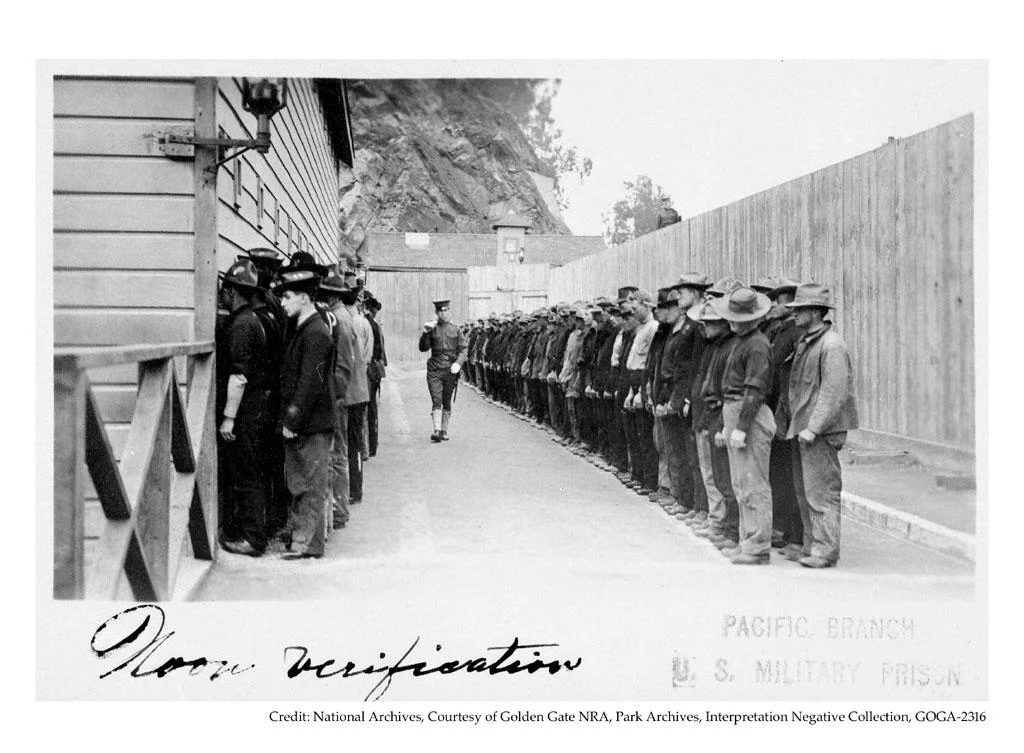
The Army also used the island to hold prisoners. That military prison preceded the federal institution familiar from films and photographs. The cellhouse built during the Army years became the physical starting point for the next chapter.
The federal years: 1934–1963
The federal penitentiary opened in 1934. Its purpose was to concentrate prisoners considered difficult to manage elsewhere, separating them from outside contacts. The bay was part of the institution’s design, as much as its walls and bars.
Alcatraz operated as a federal prison until 1963. The Bureau of Prisons history explains its place in the wider prison system. Our cellhouse story looks more closely at that period.
The island becomes a platform
In November 1969, Indians of All Tribes began an occupation that continued into June 1971. The island became a visible setting for Indigenous political action. This history deserves its own attention alongside the prison story.
Read the landscape in layers
Use the island’s buildings as questions rather than backdrops. Which institution used this space? Who lived or worked here? What does a surviving structure show, and what stories require an exhibit, an archive, or a first-person account?
Following those questions keeps a visit from becoming only a list of famous inmates. Continue with the occupation and living landscape for two other ways of understanding the same place.