The names are familiar. The institution is less so. Alcatraz’s federal history is a story about how the United States chose to confine people, not simply a collection of famous criminal biographies.
Why this island?
The federal penitentiary emerged in the aftermath of Prohibition and the Depression, amid public concern about organized crime. Federal officials wanted an isolated institution for prisoners they considered especially difficult to manage in other facilities.
Alcatraz offered an existing Army prison and a location separated from the city by water. James A. Johnston, its first federal warden, helped establish the institution’s concentrated, high-security model.
Routine behind the reputation
Al Capone, George “Machine Gun” Kelly, and Alvin Karpis are among the names associated with the island. Their notoriety can obscure the many less-famous people imprisoned there.
The Bureau of Prisons describes a tightly regulated environment. Basic necessities were provided; privileges depended on conduct. The daily story was shaped by institutional rules and restricted choices, rather than the dramatic incidents that dominate popular retellings.
What to look for in the cellhouse
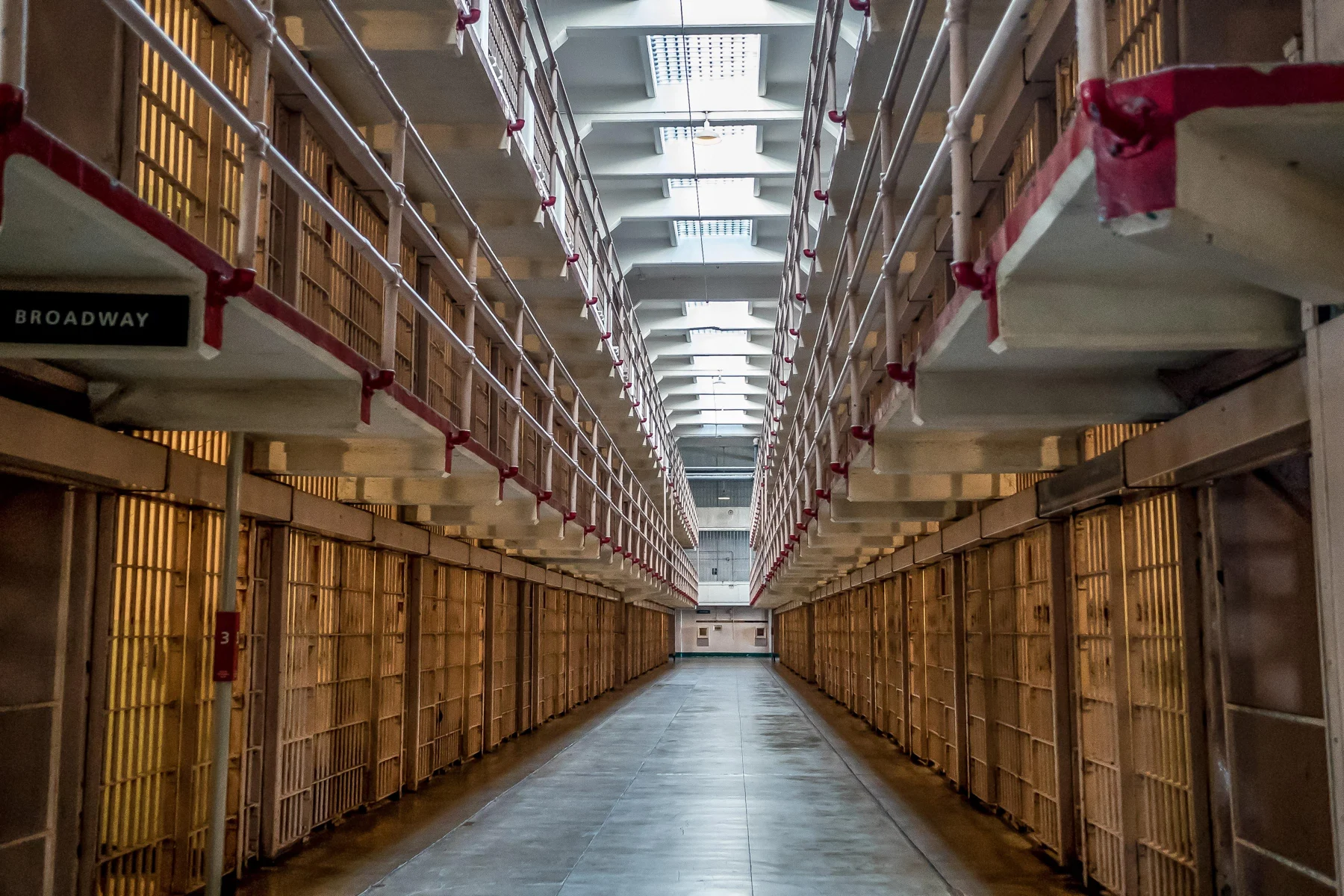
Start with the architecture visible in the photograph: stacked tiers, narrow cells, long sightlines, and a corridor lit from above. Notice the repetition. Then ask how those spaces organized movement, supervision, privacy, and daily life.
A photograph cannot tell you how a person experienced a room. Pair the visual record with the park’s interpretation and the institution’s historical account. Read both with attention to whose perspective each source represents.
Beyond the famous names
The federal prison operated from 1934 to 1963. Those dates frame one period, not the whole island. For a different starting point, read about the military post; for what followed, turn to the Indians of All Tribes occupation.