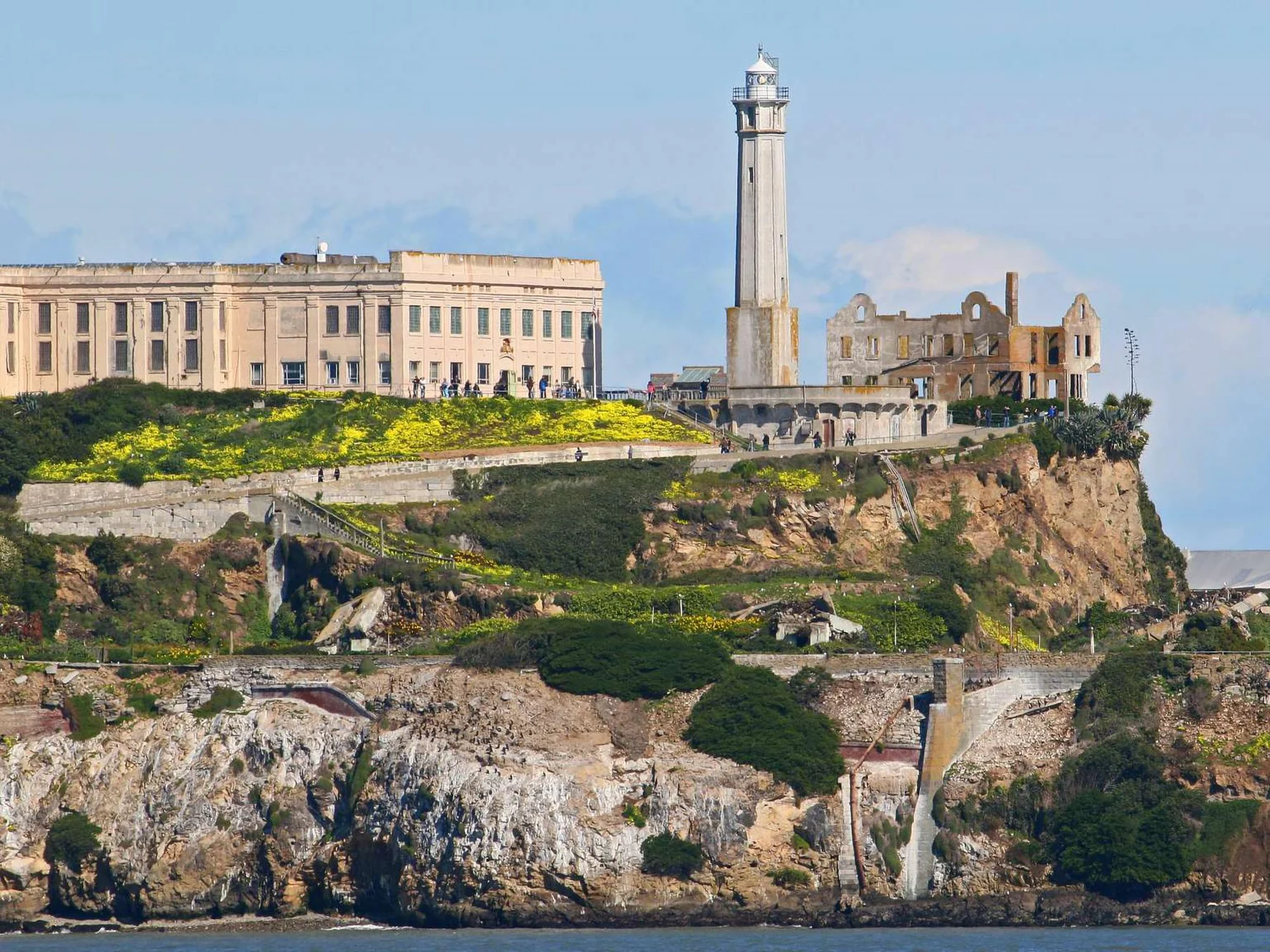
Look away from the bars for a moment. Alcatraz also holds a story about nesting birds, plants brought across the bay, and the ongoing work of caring for a small island landscape.
An island for seabirds
Alcatraz provides habitat for colonial nesting seabirds. Cormorants, gulls, night herons, egrets, and pigeon guillemots are among the birds described by the National Park Service. Wildlife is part of the island’s present, not just its distant past.
Nesting areas require protection. Follow current signs and route restrictions, give birds space, and use binoculars or a longer lens instead of moving closer. A closed path is an opportunity to look from somewhere else.
Gardens made by people
The island’s historic gardens grew from soil and plants brought in by people during the Army and Lighthouse Service years. Their presence records a desire to make a home in an exposed and demanding setting.
The restored gardens are cared for by volunteer gardeners working with the Golden Gate National Parks Conservancy. NPS describes a rainwater collection system that helps water them.
A slower way to look
Try observing one small area carefully: the texture of a wall beside a plant, the relationship between a path and the shoreline, or a bird seen from a respectful distance. You do not need a checklist of rare sightings to notice the place.
Read the landscape alongside the buildings. Both carry traces of human choices, and both need preservation. Before planning a trip, check current access information.